
Canadian economy faces slowdown: analysts
Canadians will feel the pain of slower growth and higher unemployment, and skittish consumers could tighten their wallets if the United States heads back into recession, analysts said Monday.
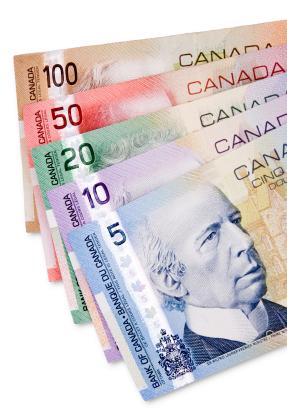
Published on August 9, 2011 The Canadian Press
After a massive selloff on North American markets Monday and more bad news on the global economy, the analysts said Canada won't be immune from a weakening U.S. economy that many predict will slip back into recession.
"It's a big factor when the biggest economy in the world and our biggest trading partner potentially goes into a tailspin," said John Stephenson, vice-president of First Asset Funds, a Toronto-based money manager.
"The spillover effects are really into overall confidence and that will impact the consumer."
Fears of a slumping U.S. economy and a growing debt has battered global confidence in the United States, hammering financial markets and sparking a pessimism not seen since the Wall Street financial crisis three years ago.
Canada is stronger economically than the United States – with booming oil and mineral sectors and a solid housing market – but the countries are so interconnected it cannot avoid fallout from a slowdown south of the border.
Canadian businesses won't be in much of a mood to hire, while consumers may lack the confidence to spend enough to keep the economy growing, Stephenson said.
That could dampen job cretaion and make it difficult to further lower the jobless rate, now at 7.2 per cent.
However, on a positive note for consumers, the falling cost of oil – down nearly 20 per cent in recent weeks – will put downward pressure on high gasoline pump prices across Canada.
S&P credit rating agency downgraded the U.S. debt from the coveted AAA status for the first time in history late Friday, sending already plummeting markets further into lows not seen since the 2008 credit crisis.
The actual impact of the downgrade is minimal – Canada saw its debt downgraded in 1993, and the stock market rallied the following year. But it has had severely negative psychological effects on investors already reeling from the European debt crisis and other U.S. indicators that signal its economy is weakening.
"(The downgrade) is the drop that makes things tip over, the bucket is getting full now and there's too much worry out there," said Louis Gagnon a business professor at Queen's University.
"The risk of a double dip – a second dip into recessionary territory – is certainly not inconceivable."
A TD Economics report said Monday there is now a 1-in-3 chance of a renewed U.S. downturn.
Fearful investors are taking money out of the stock market and putting it into perceived safe havens such as gold, which hit a new record high Monday of over US$1,700 an ounce.
"What we're seeing now is another one of those episodes of panic, we're seeing risk aversion," Gagnon said.
Canadian manufacturers and resource companies – some of the country's biggest employers – will feel the brunt of the slowdown since 80 per cent of Canadian exports head to the U.S.
Exports have already been hit by a strong loonie, which is losing steam in the wake of the recent crisis, but still hovers above parity with the greenback. It fell about a cent and a quarter to 100.92 cents US on Monday.
The Toronto Stock Exchange fell nearly 500 points Monday, extending a streak of losses that Bank of Montreal economist Robert Kavic said could continue for some time.
Wall Street's key Dow Jones industrial average dropped more than 630 points.
With the most recent market drops, average investors are losing money each day, affecting consumer confidence and spending. That could deter many from making big purchases like homes and undermine prices in the influential housing market, especially in Vancouver and Toronto.
Any deterioration in home prices would further deplete consumers' assets.
Consumers should be concerned about reduced investment income from stock losses, especially at a time when Canadians have racked up debt at cheaper borrowing rates, said Stephenson.
"The problem is very significant, its not something that people should minimize."
Gagnon said many people are growing worried about their retirement savings as the value of large pension funds and their own investments plunge on the stock markets.
"I think people have to brace themselves for tougher years ahead and it may very well be that many of us who want to retire will have to retire much later than anticipated because we can't count on the stock market to produce the returns they did in the past."